
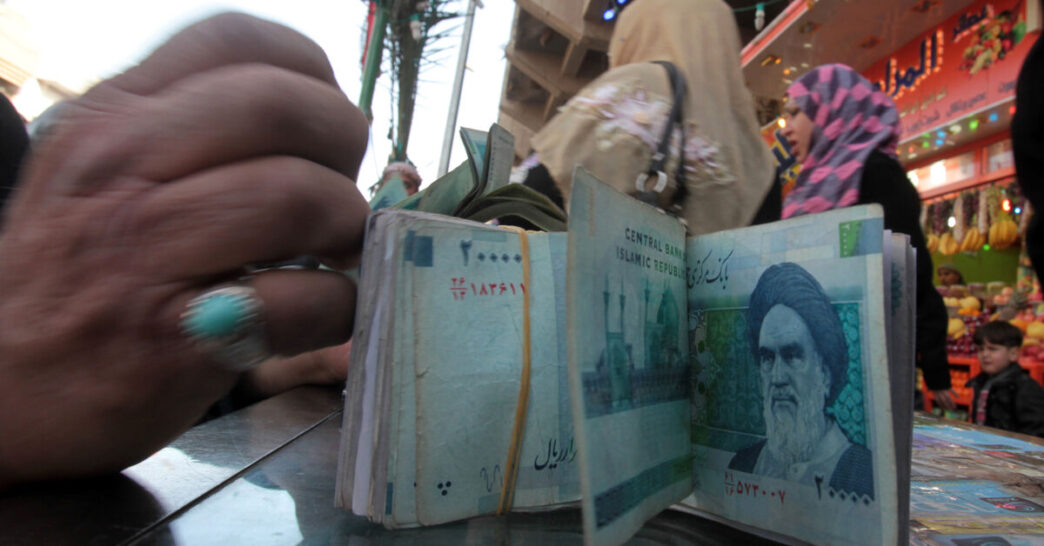
The Iranian rial hit a new record low of 1.8 million to the US dollar on Wednesday as economic strain mounts from the war and the ongoing US naval blockade.
What happened: The currency weakened to 1.82 million rials per dollar on the informal market on Wednesday, after starting the month at 1.56 million.
The rial had remained relatively stable during the first two months of the war, trading at 1.66 million to the dollar at the end of February and 1.55 million at the end of March, according to currency tracker Nevasan.
That relative stability reflected limited trading early in the conflict, but the rial’s slide resumed on Monday and could fuel inflation, as the cost of many imports is tied to the dollar rate, the Associated Press reported.
Officially, the rial is pegged at around 42,000 to the dollar, though this fixed rate does not reflect market conditions and the currency typically trades far weaker. Iran operates multiple exchange rates, including a subsidized rate of 285,000 to the dollar for essential imports, according to state media.
Why it matters: The devaluation reflects intensifying economic pressure on Iran from sanctions and the US naval blockade. The Wall Street Journal reported Tuesday that President Donald Trump has instructed aides to prepare for a prolonged blockade, with one official saying the strategy is “crushing Iran’s economy.”
Washington imposed the blockade earlier this month after the Islamic Republic began restricting ships transiting the strategic Strait of Hormuz, through which roughly a fifth of global crude oil typically flows. Maritime traffic has since plunged, with only about seven vessels a day passing through the strait, according to Reuters, down from roughly 130 daily before the war.
Al-Monitor’s correspondent in Tehran wrote on Tuesday that the US blockade is exposing Iran’s economic fragility by disrupting oil flows and imports of essentials via the southern ports.
The conflict has also taken a broader toll on the economy. State media estimated in mid-April that the war had caused roughly $270 billion in damage.
A ceasefire took effect on April 8, but American and Iranian officials have yet to reach a longer-term agreement. The most recent round of talks was held in Pakistan on April 11.
The Trump administration recently tightened sanctions on Iran, with the Treasury Department designating 35 entities on Tuesday for allegedly helping the Islamic Republic move tens of billions of dollars in sanctions-evading transactions.
The rial’s decline long predates the current war. It traded at around 80,000 to the dollar in mid-2018 and has steadily weakened since, including a 3% drop following the 12-day war last June to 910,000 rials per dollar. By the start of 2026, the currency was trading at roughly 1.4 million to the dollar.
The depreciation has unfolded alongside rampant inflation driven by budget deficits and sanctions. After withdrawing from the Iran nuclear deal in 2018, the United States reimposed sanctions on the Islamic Republic, fueling inflationary pressure by limiting Iran’s ability to export oil, conduct international trade and access foreign currency.
Know more: The fall of the rial to a then-record low of 1.34 million to the dollar last December triggered the massive protests and riots in Iran that month and in January. The demonstrations, which occurred throughout the country and were the biggest in years, ultimately died down following violent state repression.
The US-based Human Rights Activists News Agency, which tracks rights issues in Iran, said in late February that more than 7,000 people were killed in the unrest, including around 6,500 protesters and 200 members of Iran’s security forces.