
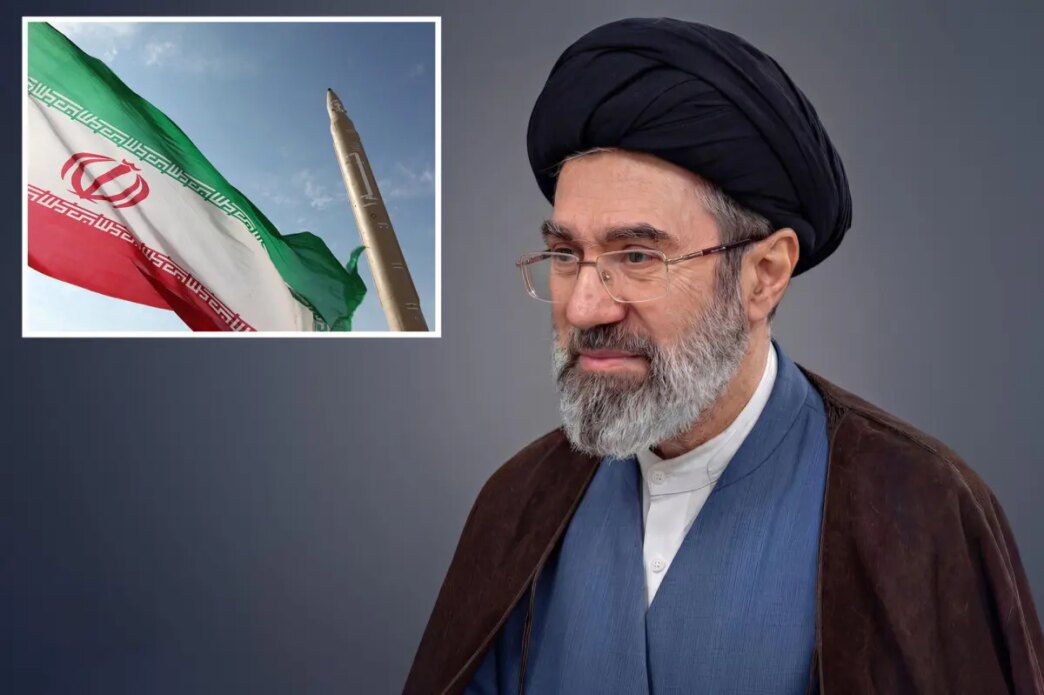
Iran’s severely injured supreme leader remained defiant on Thursday as he vowed to protect the Islamic Republic’s nuclear and missile capabilities — warning that America’s only place in the Gulf was “at the bottom of its waters.”
Ayatollah Mojtaba Khamenei, who has yet to be seen since becoming the supreme leader following his father’s death, issued another statement via state media rejecting President Trump’s peace terms and the American naval blockade on Iran’s ports.
“Ninety million proud and honorable Iranians inside and outside the country regard all of Iran’s identity-based, spiritual, human, scientific, industrial and technological capacities — from nanotechnology and biotechnology to nuclear and missile capabilities — as national assets, and will protect them just as they protect the country’s waters, land and airspace,” Khamenei’s message read.
“Foreigners who come from thousands of kilometers away to act with greed and malice there have no place in it — except at the bottom of its waters,” he added, slamming America as the “Great Satan.”
Trump has made it clear that one of his top goals of the war is to deny Iran the ability to develop nuclear weapons, with nearly 1,000 pounds of enriched uranium still located inside the country.
Secretary of State Marco Rubio said earlier this week that under no circumstances could Iran be allowed to acquire nuclear weapons or else the entire Middle East and American allies would be in danger.
“They seek to dominate the region. And imagine that with a nuclear weapon,” Rubio told Fox News.
Iran has denied allegations that it is using its uranium to develop weapons, claiming it’s only meant for a civilian nuclear program.
Along with rejecting America’s demands, Khamenei signaled that Iran would keep the Strait of Hormuz shut, warning that a “new chapter” was coming for the Persian Gulf.
The missing supreme leader claimed that Iran’s control of the strait, a critical oil choke point, would make the Gulf more secure under Tehran’s “legal rules and new management.”
While the world considers the Strait of Hormuz an international waterway open to all, Iran has moved to impose a toll on vessels transiting it, similar to the one Egypt operates in the Suez Canal.
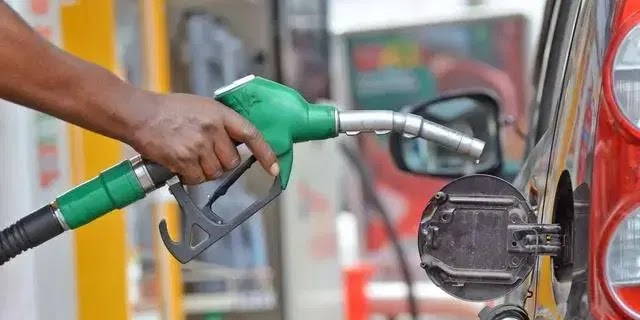
With Iran keeping the strait closed, and the US imposing its own blockade, the waterway that once saw the transport of 20% of the world’s oil has remained effectively shut for weeks, wreaking havoc on global energy markets
On Thursday, the Brent crude global benchmark for oil soared to $126 a barrel, with the average price of a gallon of gas reaching $4.30, according to AAA.
With Post Wires