
Lagos State is set to shift its long-term transportation strategy away from road expansion toward a multimodal system centred on rail, Bus Rapid Transit (BRT), and ferry services under its updated 2050 mobility master plan.
This was disclosed in a statement published by the Lagos Metropolitan Area Transport Authority (LAMATA) following a high-level stakeholders’ workshop held to revise the Strategic Transport and Mobility Master Plan (STMMP).
The move signals a major rethink of how Nigeria’s commercial capital plans to tackle worsening congestion, improve connectivity, and prepare for a projected population surge that could see Lagos reach 45 million residents by 2050.
According to LAMATA, a workshop funded by the Agence Française de Développement brought together senior government officials, regulators, urban planners, and economic stakeholders to align on a future-ready transport strategy for Lagos.
Lagos State Commissioner for Transportation, Mr. Oluwaseun Osiyemi, said the state can no longer rely solely on road construction to address its transport challenges.
He said the revised strategy will prioritise rail expansion, stronger Bus Rapid Transit (BRT) systems, and structured ferry services within an integrated multimodal transport network.
Osiyemi also said Lagos plans to modernise its public bus fleet with cleaner energy options and improve last-mile connectivity to ease commuter access and expand urban mobility.
The revised framework positions mass transit as the backbone of Lagos’ future transport system, with integration expected to boost efficiency, accessibility, and long-term sustainability across the state.
According to LAMATA Managing Director, Engr. Mrs. Abimbola Akinajo, Lagos currently records over 20 million daily trips, a figure that underscores the scale of its transport demand.
She explained that updated multimodal surveys and a new travel demand model have been completed to guide long-term planning and infrastructure investment decisions.
Akinajo added that stakeholder collaboration remains critical to ensuring the transport system can support the state’s economic and population growth.
Lagos’ transport challenges have intensified over the years due to rapid urbanisation, population growth, and heavy reliance on road transport.
This has driven a gradual policy shift toward multimodal transport solutions, including rail and waterways, as part of a broader attempt to rebalance urban mobility.
Lagos has already begun implementing elements of its long-term mobility strategy, particularly in rail and clean energy transport initiatives.
The state has set a target for 52% of BRT buses to run on clean energy by 2050, alongside a broader push to reduce private car usage from 11% in 2015 to just 2% by 2050.
Pilot conversions of BRT buses to gas-powered systems are already underway, while future fleet expansion is expected to prioritise cleaner fuels.
LAMATA has also indicated plans to deploy articulated buses on BRT corridors to improve capacity, although timelines remain unclear.
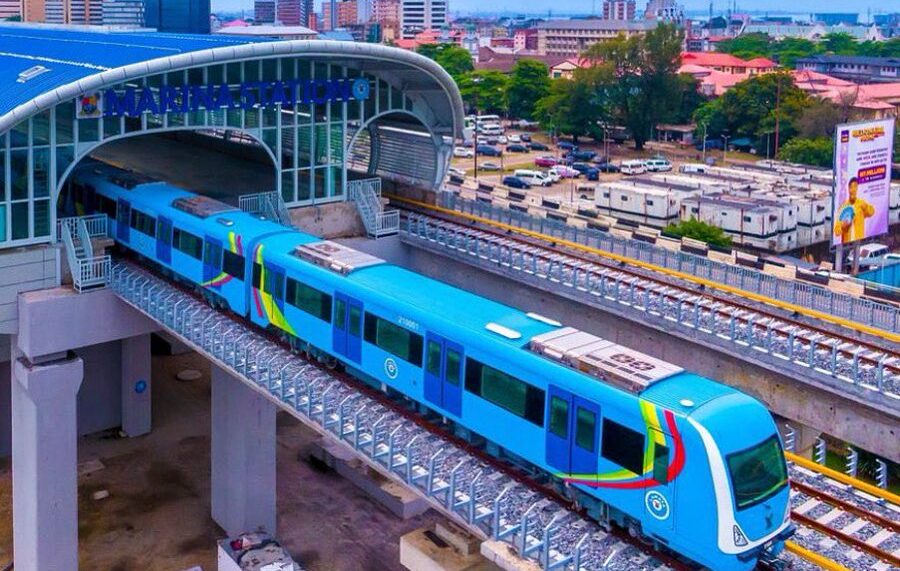
Lagos’ transport master plan includes six planned rail lines, although only portions of the Blue Line (Marina–Mile 2) and Red Line (Oyingbo–Agbado) are currently operational, with further phases under construction.
The state is also exploring regional expansion of the Red Line into Ogun State to strengthen inter-state connectivity.
A major component of the rail strategy is the proposed Green Line, a $3 billion project being developed with MOFI and China Harbour Engineering Company (CHEC), which remains in the pipeline.
On the waterways side, the €410 million Omi Eko Project is expected to transform inland water transport, delivering 15 ferry routes, 25 terminals, and more than 75 electric ferries.
When completed, the system is projected to move up to 25 million passengers annually, easing pressure on roads while cutting emissions and strengthening Lagos’ multimodal transport network.