
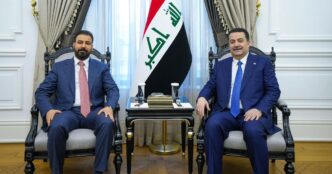
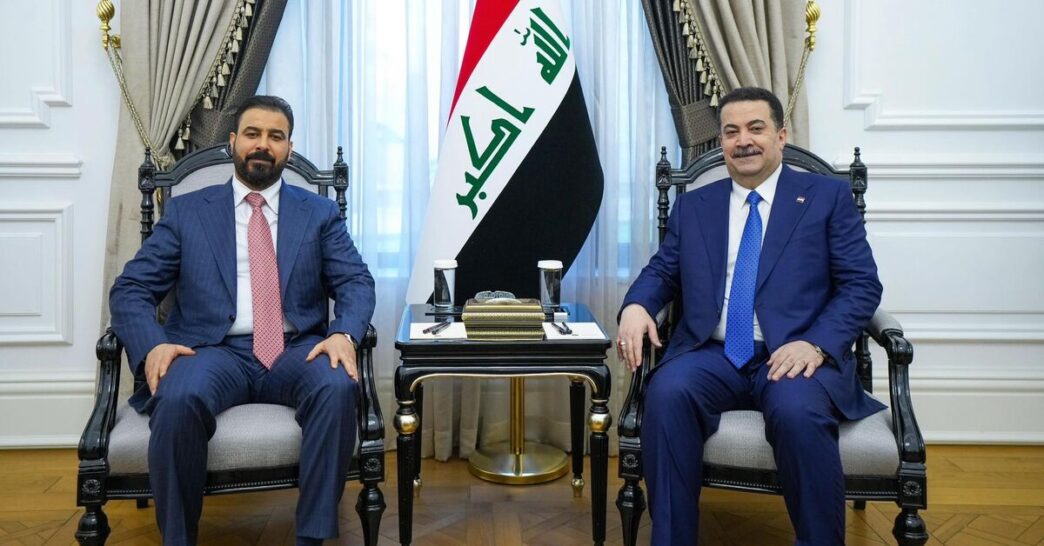
Iraqi businessman Ali al-Zaidi was nominated by the Shiite-led Coordination Framework on Monday after months of disagreements over who to put forth as a candidate for prime minister.
Zaidi, who emerged as a consensus candidate at the last minute, has friendly relations with much of Iraq’s political elite, including figures aligned with Iran and the United States, and would bring a strong business background to the office. A number of Kurdish and Sunni politicians have signaled openness to supporting his bid to form a government, though it remains unclear whether the Trump administration will back him.
The Coordination Framework, an alliance of Shiite parties, originally nominated former Prime Minister Nouri al-Maliki in January, but he was opposed by some Sunni and Shiite leaders as well as the US, with President Donald Trump in January referring to his policies as “insane” and threatening to cut off support to Iraq. Maliki, who served as premier from 2006 to 2014, is widely seen as close to Iran and presided over the Islamic State’s emergence.
Iraqi President Nizar Amede formally tapped Zaidi to form a government late Monday evening, calling on politicians to “support him and cooperate with him to expedite the completion of this constitutional and national obligation.”
انطلاقاً من مسؤولياتنا الدستورية، كلّفنا مرشّح الكتلة النيابية الأكثر عدداً، السيد علي الزيدي، بتشكيل الحكومة الجديدة، وبذلك أنجزنا المرحلة الثالثة من الاستحقاق الدستوري الذي لم يكن ليتحمّل التأخير، ونتمنى له التوفيق في تشكيل حكومة وطنية قوية تمثّل جميع العراقيين وتلبّي تطلعاتهم،… pic.twitter.com/FyZdZBAK3h
— نزار ئاميدي (@nizarAmede) April 27, 2026
The Coordination Framework is a powerful group that includes Maliki, incumbent Prime Minister Mohammed Shia al-Sudani, Iran-backed Asaib Ahl al-Haq militia leader Qais al-Khazali, cleric Ammar al-Hakim and others. It emerged as the largest bloc following the November elections and controls about 185 seats in the 329-member parliament. In the Iraqi system, the president taps a nominee from the largest post-election bloc to form a government, and parliament must approve said government by a two-thirds majority.
The nomination could end months of political paralysis in Iraq. Amede was not elected president until April 11, missing the Jan. 29 deadline corresponding to 30 days following the first post-election parliament session, amid a dispute between Kurdish parties over who to back. A prime minister was supposed to have been chosen by last Sunday.
Who is Zaidi?
Zaidi was born in Baghdad in 1986 into a family originally from the southern Dhi Qar province. He holds a master’s degree in banking and finance and is a member of the Iraqi Bar Association, according to Al Jazeera.
He has extensive business experience, owning the Taawon Hypermarket shopping centers in Baghdad, the Al Awees holding company and the local news outlet Dijlah TV, Iraqi media outlets reported.
The New York Times described Zaidi as the owner of the Al-Janoob Islamic Bank, one of the largest private banks in Iraq, while local outlets Shafaq and Kurdistan 24 reported he previously chaired its board.
In early 2024, the institution and seven others were barred by the Iraqi Central Bank from making US dollar transactions in an effort to crack down on money laundering and illicit use of American currency. The move followed a senior US Treasury Department delegation visiting Baghdad and was made in order to stop smuggling of dollars from Iraq to Iran, Reuters reported at the time.
Legal sources familiar with the issue told Al-Monitor that there are no US sanctions on either Al-Janoob Islamic Bank or Zaidi. The sources said that the block was “due to the risks associated with Al Janoob’s ownership,” adding that an independent review found no evidence of any direct outflow of funds from the bank to malign actors.
Zaidi is not affiliated with any political party and appeared to have the support of both Maliki and Sudani. His nomination came as a surprise as he was not among the candidates floated as an alternative to Maliki in recent weeks.
Government formation underway
Zaidi held a number of meetings and phone calls on Tuesday as he seeks to form a government. He discussed the process with Sudani in Baghdad and held a call with Kurdistan Democratic Party leader Masoud Barzani.
Iraqi politicians including Khazali and Patriotic Union of Kurdistan leader Bafel Talabani congratulated Zaidi on Tuesday. Parliament speaker Haibet al-Halbousi, a member of the predominantly Sunni Progress Party, said late Monday that he welcomed Zaidi’s designation.
It will require around 220 votes to confirm Zaidi and his cabinet, meaning he will need backing beyond Coordination Framework supporters in parliament. The Progress Party holds 27 seats in parliament, while the KDP holds 26 and the PUK 15.
Zaidi was also congratulated by Jordanian Prime Minister Jafar Hassan and French Ambassador to Iraq Patrick Durel, and he spoke with Qatari Prime Minister and Foreign Minister Sheikh Mohammed bin Abdulrahman bin Jassim Al Thani on Tuesday.
US keeps up pressure
The Trump administration has yet to comment on Zaidi’s nomination. Neither the White House nor the State Department responded to Al-Monitor’s request for comment on Monday. The US is increasing pressure on Iraq over the influence of Iran-backed militias in the country. On Monday, the State Department’s Rewards for Justice program said it is offering up to $10 million for information on Haydar al-Gharawi, leader of the Iran-aligned Harakat Ansar Allah al-Awfiya armed group.
Days earlier, the US offered an up-to $10 million reward for information on Abu Alaa al-Walai, leader of Kataib Sayyid al-Shuhada, another Iran-backed militia.
Iran-backed militias operating under the banner of the Islamic Resistance in Iraq have carried out hundreds of strikes on US assets in the country as well as targets in Gulf states since the US-Israel-Iran war began on Feb. 28. The US military has conducted strikes targeting the militias as well, and Iraq’s Popular Mobilization Units say 80 of their fighters have been killed.
The PMU, a group of predominantly Shiite militias that formed to fight ISIS in 2014, contains a number of Iran-backed entities, including US-designated Kataib Hezbollah. The PMU was integrated into the Iraqi armed forces in 2016 but in reality maintains a high degree of autonomy.
The Wall Street Journal reported last week that the Trump administration suspended nearly $500 million in US dollar shipments to Iraq in a bid to push Baghdad to dismantle Iran-backed armed groups. Iraqi oil export revenue is sent to a bank at the Federal Reserve in New York, giving the US a degree of control over dollar flows to Iraq.