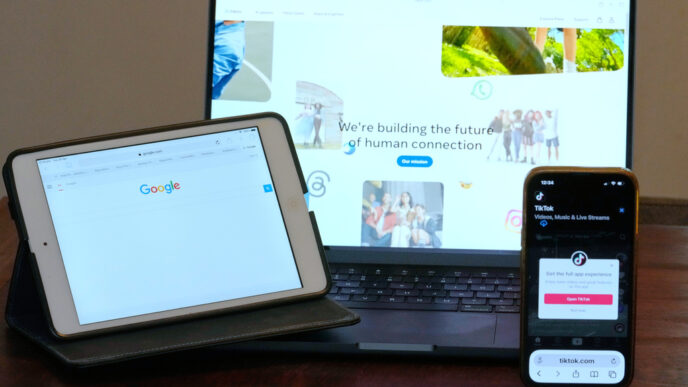



Nigeria’s digital economy is increasingly shaped by mobile access, not desktop habit. DataReportal reported 150 million cellular mobile connections in Nigeria at the start of 2025, while U.S. trade guidance published in 2025 described the country as Africa’s largest mobile market. That matters because more side-income models now begin on a phone screen, from content publishing to social traffic to affiliate campaigns.
But there is a hard truth behind the “earn from your phone” pitch: mobile income is easy to enter and easy to get wrong. The problem is rarely the lack of offers. The problem is choosing a partner site that looks polished, sounds official, and still leaves a newcomer with weak reporting, poor support, or no reliable way to verify whether the brand connection is real.
Why mobile-first earning changes the affiliate workflow
A few years ago, affiliate work still felt desktop-heavy. Today, plenty of publishers and small operators check traffic sources, compare conversions, review first deposits, and message managers between meetings, on public transport, or during short breaks in the day.
That shift changes what “good infrastructure” means. A serious affiliate setup must now work cleanly on mobile, not just at the landing page level, but also in reporting, support, and fast decision-making. If a partner cannot be monitored from a smartphone, everything slows down: testing, pruning bad traffic, responding to compliance issues, and identifying which content angle is actually converting.
The first safety check: verify the partner through official brand-owned channels
This is where many beginners make a basic mistake. They judge a partner only by the headline commission number, then skip the more important question: is this partner clearly connected to the brand it claims to represent?
A practical cyber-hygiene checklist looks like this:
- Check whether the partner is named inside an official brand guide or help ecosystem
- Check whether the partner domain has an active blog or news stream, not a dead shell
- Check whether official brand contact pages reference partner-related contact details
- Check for consistent naming across domains, support emails, and brand materials
- Check whether the content feels maintained in the current year, not abandoned
That is why, when people assess a MelBet affiliate option, the sensible move is to start with verification rather than registration. The official MelBet guidebook explicitly identifies MelBetPartners.com and MelBetAffiliates.com as the affiliate program’s official websites. On top of that, MelBetPartners.com runs an active blog, while MelBetAffiliates.com maintains a News section with updates dated 2026. Official MelBet contact pages also list [email protected] for partnership queries, which is another useful cross-check for newcomers trying to distinguish official channels from clones or recycled brand copies.
Additionally, a link to MelBetPartners.com is located directly in the footer of the main brand website – melbet.com. This is another important sign of the affiliate program’s legitimacy, as it confirms a direct connection to the parent brand.
That kind of cross-reference matters more than many people think. In affiliate marketing, especially in iGaming, trust is built through consistency. If the guidebook, the partner domains, the content updates, and the official contact environment all point in the same direction, the risk of walking into a fake or low-trust setup drops sharply.
Why the mobile angle matters more in 2026
There is also a practical reason this topic fits the Nigerian market. Many people exploring extra income are not sitting in front of a desktop dashboard all day. They are working from phones, switching between messaging apps, analytics tabs, browser windows, and content drafts.
In that environment, a partner program has to support short-session management. You may need to check whether a campaign has started generating registrations, whether one GEO is underperforming, or whether a traffic source suddenly looks suspicious. Mobile earning is not passive magic. It is fast operational work done in small windows of time.
An affiliate app only matters if it improves decisions
That is where the second anchor makes sense. For anyone managing campaigns from a phone, the MelBet affiliate app discussion is not really about branding. It is about workflow: can the partner review clicks, registrations, deposits, and campaign movement without opening a laptop every hour, and can a beginner find the official affiliate resources through a guidebook instead of random third-party pages? The guidebook’s affiliate section is useful here because it acts as a brand-controlled checkpoint rather than just another promotional landing page.
A decent mobile workflow usually needs four things:
- Quick visibility into clicks, sign-ups, and first deposits
- Clear filters for traffic source or campaign segment
- Fast access to official instructions and support paths
- Enough transparency to catch bad traffic before it becomes expensive
If those basics are missing, the “mobile earning” angle becomes a slogan, not a system.
What Nigerian beginners should check before they sign anything
Before joining any affiliate program in the betting or casino segment, a newcomer should pressure-test the setup from both a business and a security perspective.
Here are the most useful questions to ask:
- Does the partner explain how attribution works? Last-click logic, referral links, and qualification rules should not be vague.
- Are the payout models clear? RevShare, CPA, and hybrid terms should be readable without decoding marketing fluff.
- Is there evidence of current maintenance? Fresh blog or news posts are a small but telling sign.
- Can official brand-owned sources confirm the partner relationship? This is one of the strongest filters.
- Can the workflow be handled from mobile? That matters more now than it did even two years ago.
This is also why blog and news sections should not be treated as cosmetic extras. An active partner blog can signal that the program is still communicating with affiliates, publishing updates, and maintaining its public-facing infrastructure. In MelBet’s case, the official guidebook points to the two official affiliate sites, MelBetPartners.com and MelBetAffiliates.com; one maintains a blog and the other a news stream, both of which strengthen the verification trail for a cautious newcomer.
The bigger lesson
The strongest affiliate operators in 2026 are not defined by flashy promises. They are defined by verifiable structure: official domains, current content, brand-linked contact routes, and tools that support a mobile-first workday.
For Nigerian creators, small publishers, and media operators exploring new income lines, that is the real takeaway. Mobile earning can be real, and affiliate marketing can be part of it, but only when the partner passes the trust test first and the workflow holds up on the device where the work actually happens.