
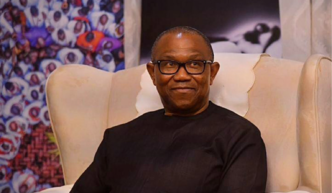
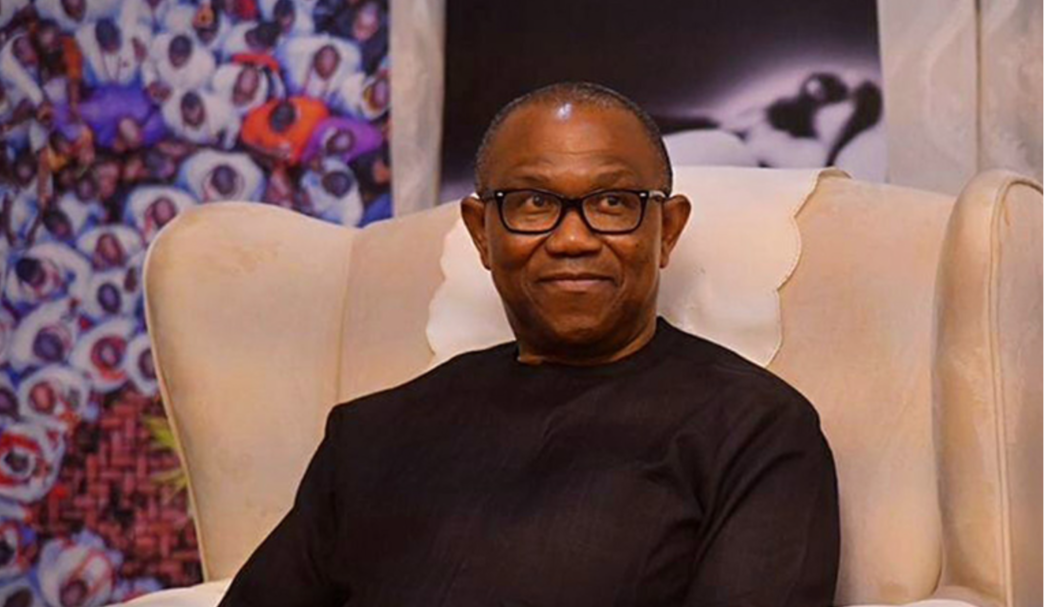
Peter Obi, former Labour Party presidential candidate and ex-governor of Anambra State, has criticised the Federal Government’s borrowing strategy, saying it is not translating into economic growth or improved living standards.
Obi made this known in a post on X (formerly Twitter) on April 30, 2026.
The comments come amid ongoing concerns over Nigeria’s rising debt profile and the effectiveness of government borrowing in driving development.
Obi warned that borrowing for consumption rather than production is harmful to the economy. Nigeria’s major challenge is not just the volume of debt, but the lack of productivity tied to it.
He added that responsible economies borrow with discipline, clear purpose, and structured plans for repayment through productive investments.
The latest concerns over Nigeria’s borrowing come amid fresh loan approvals under the current administration.
Nairametrics recently reported that President Bola Ahmed Tinubu sought and secured approval for a $516 million external loan to finance sections of the Sokoto–Badagry Superhighway, one of the government’s flagship infrastructure projects.
The loan, arranged through Deutsche Bank, is expected to fund the first phase of the over 1,000km highway linking northern and southern economic corridors, with the aim of improving connectivity, trade, and logistics efficiency.
While the government has defended the borrowing as infrastructure-driven and growth-focused, the move has generated mixed reactions, with Nigerians raising concerns about rising debt levels and the need for clear economic returns on such loans.
Obi cited the Fiscal Responsibility Act 2007, which requires that government borrowing must include a clear purpose and a cost-benefit analysis outlining economic and social returns.
According to him, rising debt servicing costs limit the government’s ability to invest in key sectors that drive economic growth and human development.
Nairametrics reported that the Federal Government has significantly increased its borrowing plans for 2026, raising the figure to N29.20 trillion following an expansion in the proposed budget and fiscal deficit.
The revised borrowing estimate represents an increase of N11.31 trillion from the earlier projection of N17.89 trillion, reflecting a sharp rise in financing needs.
According to the report, the adjustment is tied to a widening fiscal deficit now estimated at N31.46 trillion, as total government expenditure is projected at N68.32 trillion against expected revenue of N36.87 trillion.
The gap between revenue and spending has driven a heavier reliance on debt, with borrowing expected to account for the bulk of deficit financing.