
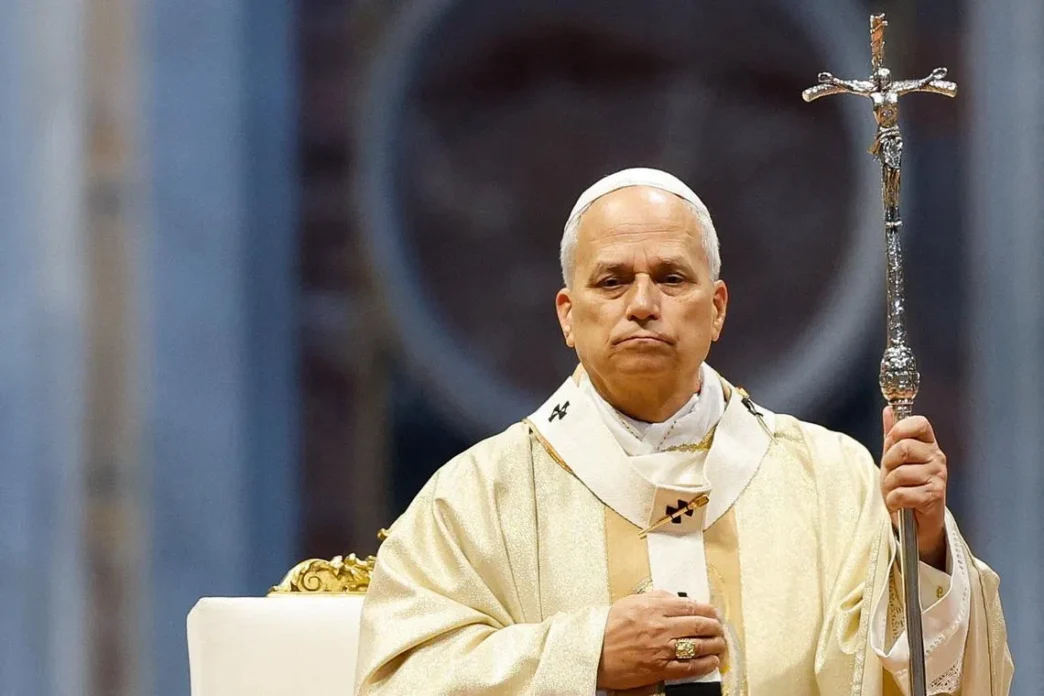
VATICAN CITY – Pope Leo XIV’s four-nation Africa tour featured firm denunciations of despotism and war, and also unprecedented attacks from US President Donald Trump that grabbed headlines.
But a smaller moment, in which the Pope said the Catholic Church should prioritise questions of inequality and justice over those of sexual ethics, may prove to be of longer-lasting importance for the Church’s 1.4 billion members, experts said.
“The unity or division of the Church should not revolve around sexual matters,” Pope Leo, the first US pope, said in a press conference on his flight home on April 23.
“I believe there are much greater and more important issues, such as justice, equality… that would all take priority before that particular issue,” he added.
Executive director Marianne Duddy-Burke of Dignity USA, a group that supports LGBTQ Catholics, called the Pope’s remarks “a very significant and overdue reorientation of priorities”.
Priests and bishops in the global Church have long emphasised as high priorities its teachings on sexual issues, including its bans on abortion, birth control and same-sex marriage.
On his first trip to Africa in 2009, the late Pope Benedict XVI sparked an international outcry when he said the Church could not relax its ban on Catholics using condoms, even to help fight the transmission of human immunodeficiency virus or acquired immune deficiency syndrome.
Pope Benedict said allowing condoms would only “increase the problem” ethically.
Pope Leo made his comments on April 23 in response to a question about the Church offering blessings for same-sex couples.
He said he supported a landmark 2023 decision by the late Pope Francis allowing pastors to give blessings to same-sex couples informally, outside of a ritual service, and on a case-by-case basis.
But Pope Leo said he wanted to prioritise other ethical questions and did not want the blessings to be formalised further.
“To go beyond that today, I think that the topic can cause more disunity than unity,” the 70-year-old pontiff said.
Reverend James Keenan, an academic at Boston College, called Pope Leo’s approach new for the global Church.
The Pope is “stating that the Vatican has a hierarchy of concerns and the perception that matters of sexuality have singular priority of place is not the case”, said Rev Keenan, a Jesuit priest who founded a global network of Catholic academics focused on ethical issues.
“This is clearly a prudential judgment by the pontiff… that issues of blessing gay marriage ought not eclipse more immediate challenges of dictatorships and war,” Rev Keenan added.
The Catholic Church teaches that sexual relationships outside heterosexual marriage are sinful. It says people with same-sex attractions should try to be chaste.
Pope Francis, who led the Church for 12 years until his death in April 2025, also sought to emphasise the Church’s teachings on justice issues.
Asked in 2013 about rumours surrounding a priest working at the Vatican being gay, Pope Francis famously responded: “If a person is gay and is seeking the Lord and has goodwill, who am I to judge them?”
Those remarks, signalling unprecedented openness from a pope towards LGBTQ Catholics, became a seminal moment in Pope Francis’ tenure, widely quoted and printed on merchandise and T-shirts.
“This seems like Leo’s ‘Who am I to judge?’ moment,” said Mr David Gibson, a Vatican expert and academic at Fordham University, about Pope Leo’s April 23 remarks.
“(Leo) is about peace and justice and sees those moral teachings as equally important as sexual ethics,” Mr Gibson said.
Executive director Francis DeBernardo of New Ways Ministry, another group that supports LGBTQ Catholics, praised Pope Leo’s response.
“He listed other matters, more social matters – justice, equality, freedom – as being of greater moral concern,” said Mr DeBernardo. “For years, Catholic advocates for LGBTQ+ people have been saying the same thing.” REUTERS