

By Kazeem Ugbodaga
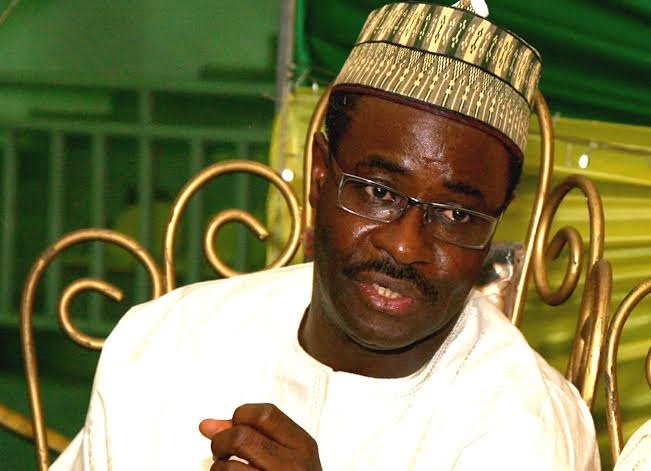
The Director-General of the Budget Office of the Federation, Tanimu Yakubu, has dismissed claims that subsidy removal automatically generates surplus revenue for government spending, describing such assumptions as fundamentally flawed and misleading.
In a detailed fiscal intervention titled “Reform Is Not a Windfall,” Yakubu argued that the removal of petrol subsidy and other pricing distortions does not create new liquidity, but merely corrects systemic imbalances within Nigeria’s public finance framework.
According to him, the widely held belief that subsidy removal produces immediate cash gains reflects a misunderstanding of fiscal dynamics, noting that while such reforms improve long-term financial sustainability, they do not translate into instant funds available for discretionary use.
“Subsidy removal does not create liquidity. It eliminates a distortion but it does not, in itself, generate a stock of cash,” he stated.
Yakubu explained that Nigeria’s subsidy regime extends beyond petrol pricing to include foreign exchange management and electricity tariffs, describing all three as interconnected forms of underpricing that impose hidden costs on the state.
He noted that artificially low exchange rates function as implicit subsidies on imports, while underpriced electricity tariffs create persistent funding gaps that require government intervention.
“These are not isolated policies but part of a broader fiscal architecture defined by mispricing of scarce resources,” he said, warning that addressing them in isolation leads to incomplete reforms and policy reversals.
The Budget Office boss further identified structural weaknesses in Nigeria’s fiscal system, arguing that the core challenge is not a lack of revenue but the failure to fully capture, recognise and properly channel it within the constitutional framework.
He pointed to widespread practices such as revenue netting, institutional retention and off-budget expenditures as key sources of fiscal leakage, which obscure the true scale of government earnings and obligations.
“Nigeria does not operate a closed fiscal system it operates a porous one,” Yakubu said, stressing that significant public revenue dissipates before entering the official accounting structure.
Addressing criticisms that recent economic reforms have tightened fiscal conditions, Yakubu described the situation as a necessary transitional phase rather than policy failure.
He explained that measures such as exchange rate alignment and subsidy removal inevitably increase short-term pressure by exposing previously hidden costs, even as they improve long-term efficiency and competitiveness.
“Every serious reform compresses before it expands what is being experienced is adjustment,” he said.
Yakubu also highlighted what he described as a structural imbalance in Nigeria’s fiscal federalism, where revenues are shared across tiers of government while major financial obligations, including debt servicing and macroeconomic stabilisation, remain concentrated at the federal level.
He said this asymmetry creates misaligned incentives, with subnational governments benefiting from increased revenue distribution while the Federal Government bears the burden of economic adjustments.
To address these challenges, Yakubu pointed to the recently introduced Executive Order 9 (2026), which seeks to strengthen fiscal discipline by enforcing the full remittance of public revenues into the Consolidated Revenue Fund before distribution.
He said the policy is aimed at eliminating unauthorised deductions, improving transparency and restoring integrity to the fiscal system.
“Executive Order 9 is not about creating new revenue, but about closing leakages and ensuring that all public funds are properly accounted for,” he noted.
Yakubu emphasised that subsidy reforms and revenue capture must be pursued together, as both address different dimensions of the same fiscal challenge.
He maintained that Nigeria’s long-term fiscal stability will depend on eliminating pricing distortions, strengthening institutional accountability and aligning revenue generation with expenditure responsibilities.
“The expansion of fiscal space will not come from illusory windfalls but from recovering what is already earned and governing it effectively,” he said.
He said that Nigeria’s ongoing reforms represent a broader effort to rebuild the country’s public finance architecture, transitioning from a system marked by opacity and leakage to one defined by transparency, discipline and sustainability.