
It’s the messiest lawsuit Artificial Intelligence has faced yet — with the fate of billions, and potentially humanity itself, in the jury’s hands.
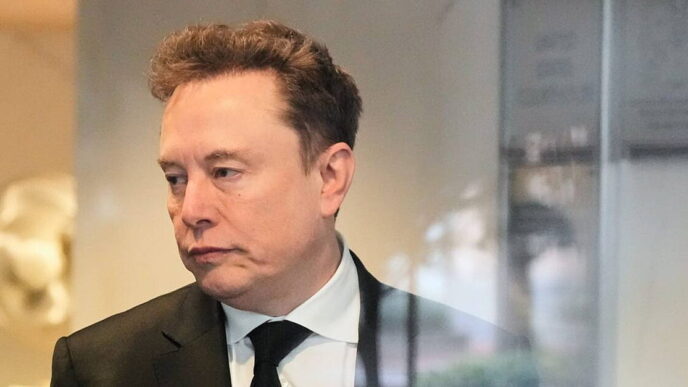
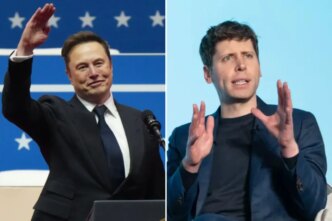
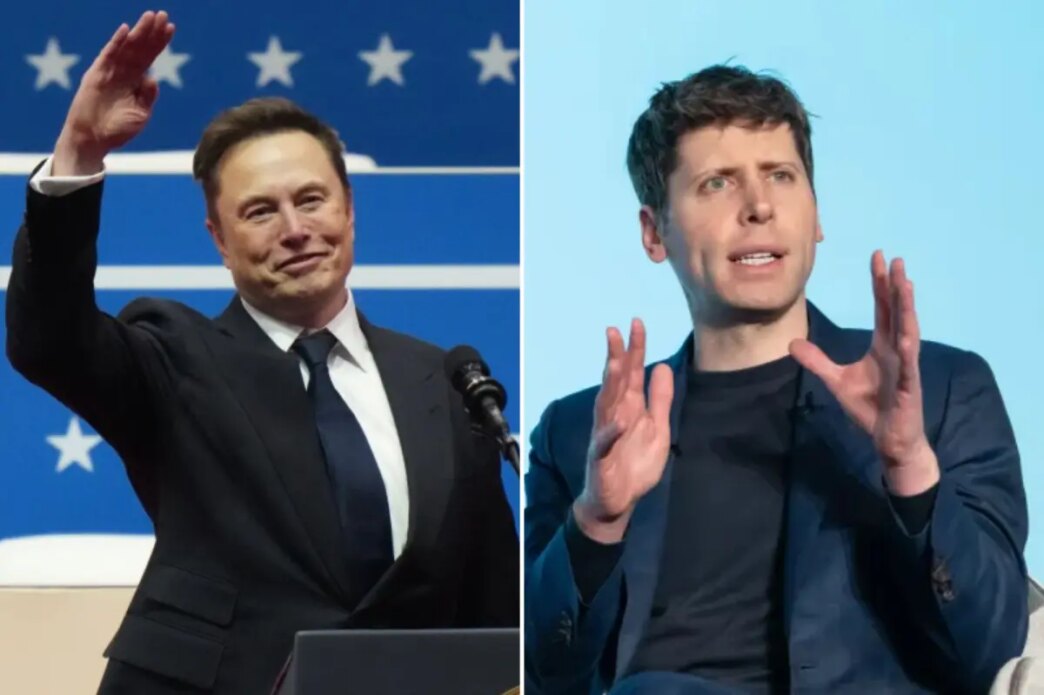
The world’s richest man, Elon Musk, is squaring off against former ally (and fellow billionaire) Sam Altman in a blockbuster federal trial that kicks off today over the soul — and future — of OpenAI, which they co-founded.
Musk’s lawsuit contends the company has betrayed its founding principals in a fight which has devolved into bitter accusations of betrayal, greed and deceit among some of Silicon Valley’s most powerful tech titans.
Here’s how the drama has unfolded so far— and what we can expect to see as the case plays out at federal court in Oakland, California.
How we got here
The clash of tech titans goes back to OpenAI’s earliest days.
Musk and Altman, currently CEO of OpenAI, founded the organization with others in 2015 as a nonprofit focused on developing artificial intelligence safely and transparently to benefit humanity.
But cracks began to show as the company grew and an acrimonious power struggle emerged between the pair over its direction, governance and, particularly — how to fund the emerging technology.
Musk, who helped fund the venture, stepped down from OpenAI in 2018 — way before the public launch of its most successful product, ChatGPT, in 2022 which in a few short months made the brand a household name and one of the most important tech companies in the world.
“Guys, I’ve had enough,” Musk wrote in an email a few months prior to his departure.
“Either go do something on your own or continue with OpenAI as a nonprofit.
“I will no longer fund OpenAI until you have made a firm commitment to stay or I’m just being a fool who is essentially providing free funding for you to create a startup.”
Musk officially stepped down due to a conflict of interest, as he was developing AI for use in his Tesla vehicles. He also launched a commercial AI product, xAI in 2023.
After Musk’s departure, OpenAI transitioned to a “capped-profit” model and forged a multibillion-dollar partnership with Microsoft — moves Musk claims violated the organization’s original mission.
Musk launched his suit in 2024, claiming the nonprofit he funded with at least $44 million took advantage of his financial resources.
In his lawsuit, Musk alleges OpenAI has since become a profit-driven enterprise, prioritizing commercial success over the public good, and that the company’s leaders, including Altman and company president Greg Brockman wrongfully profited from his charitable contributions.
“Scam Altman and Greg Stockman [sic] stole a charity. Full stop,” Musk wrote Monday on X, before the judge presiding over the case ordered him to limit his public posts about the matter during proceedings.
OpenAI and Altman reject that characterization, arguing Musk is challenging the company as a competitor with xAI and its chatbot Grok.
They claim Musk’s suit is “motivated by jealousy, regret for walking away from OpenAI and a desire to derail a competing AI company”, according to a statement from OpenAI.
Microsoft, which Musk named as a co-defendant in the case, is accused of aiding and abetting OpenAI’s breach of charitable trust.
In a motion to dismiss, Microsoft called Musk’s arguments “devoid of factual specificity and substantiation, repeatedly relying on unsupported ‘information and belief.’”
Musk is seeking about $150 billion in damages from OpenAI and Microsoft. He’s also asking the court to boot Altman from the company’s board and revert OpenAI to a nonprofit structure.
What’s in the discovery file
Hundreds of court filings have revealed the private communications of Musk, Altman, other OpenAI founders and public figures.
They include cringey texts, call logs and personal diary entries that shed light on rivalries and internal tensions among the tech heavyweights, while also offering a rare, unfiltered look at how their personal relationships, competition and massive financial stakes were managed behind the scenes.
In one 2023 email submitted as an exhibit, Altman describes Musk as his “hero” but adds that he’s hurt by his attacks on OpenAI.
“I hear you and it is certainly not my intention to be hurtful, for which I apologize, but the fate of civilization is at stake,” Musk said in response.
The documents indicate Musk was in communication with Meta boss Mark Zuckerberg about issues tied to OpenAI.
Referring to Musk’s government-slashing efforts through the Department of Government Efficiency (DOGE), Zuckerberg texted, “Looks like DOGE is making progress. I’ve got our teams on alert to take down content doxxing or threatening the people on your team. Let me know if there’s anything else I can do to help.”
Musk reacted to the Feb. 3, 2025 message with a heart emoji, then asked, “Are you open to the idea of bidding on OpenAI with me and some others?”
Musk’s private comments about Amazon founder Jeff Bezos being a “tool” also surfaced in the filings, highlighting personal friction underlying some of the industry’s biggest players.
Lawyers even dug into Musk’s whereabouts and activities — including his attendance at the notorious Burning Man festival — as they attempted to establish timelines and priorities during key moments.
Mentions of Musk’s alleged use of the powerful drug Ketamine appeared in pretrial wrangling but were ultimately ruled inadmissible, according to the Post.
Writings attributed to Brockman reportedly revealed his concern about wealth, control and OpenAI’s evolving structure.
What Musk and Altman have said about the case so far
Musk has cast the lawsuit as a fight to restore OpenAI’s founding principles. He has argued the company strayed from its original mission and become too closely aligned with corporate interests — and that’s bad for the future of humanity.
He has also signaled the case is about principle rather than profit, saying he would direct any damages won in the case to charity causes aligned with OpenAI’s original goals and assured he would not profit personally from the suit.
Altman and OpenAI, however, have pushed back forcefully.
They argue Musk was aware of — and at times supportive of — the company’s evolution, and now seeks to undermine it as a rival, interfere with its operations and gain leverage in a rapidly growing and evolving industry.
The outcome of the trial could ultimately determine not only who controls OpenAI, but how the most powerful technology of a generation should be governed.
Who’s expected to testify
The witness list for the Musk–Altman showdown reads less like a typical court docket and more like a Silicon Valley power index, with several key figures set to testify.
At the center of it all, Musk himself is expected to take the stand, setting up a high-stakes moment when the billionaire will publicly defend his claims under oath. Across the aisle, Altman is poised to play a leading role in laying out the defense for OpenAI and its controversial evolution.
The courtroom drama is also slated to feature testimony from Brockman, Microsoft chief Satya Nadella, whose company’s multibillion-dollar investment in OpenAI has become a point of scrutiny. Another major insider, ex-OpenAI employee Mira Murati, is also on the list of potential witnesses.
But it’s not just executives who could take the stand. Shivon Zilis — a former OpenAI board member and the mother of at least four of Musk’s children, who now works at Musk’s brain implant company Neuralink — is expected to testify, which will likely add a personal dimension to the high profile case.
Tasha McCauley, another former OpenAI board member who previously attempted to oust Altman, is also listed to appear.
The case is expected to pull back the curtain on OpenAI’s internal decision-making, its financial arrangements and its motivations, and the trial is expected to run for approximately four weeks.