
Henry Seriake Dickson defects, strengthens Nigeria Democratic Congress ahead of 2027
Douye Diri faces growing internal cracks, defections hit APC structure
Political tensions escalate amid allegations, counter-moves and grassroots realignments
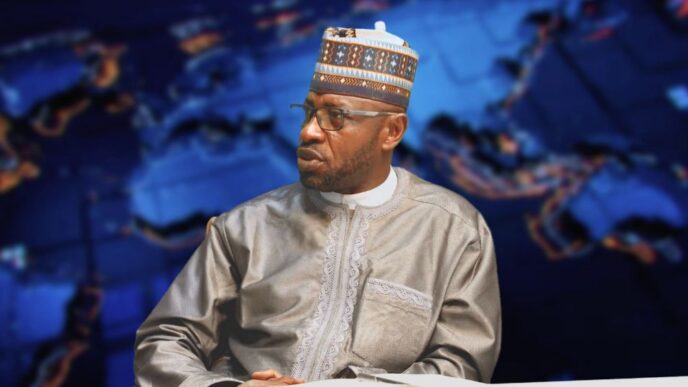
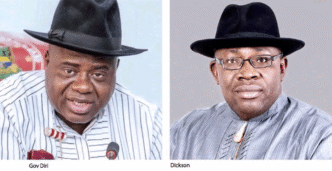
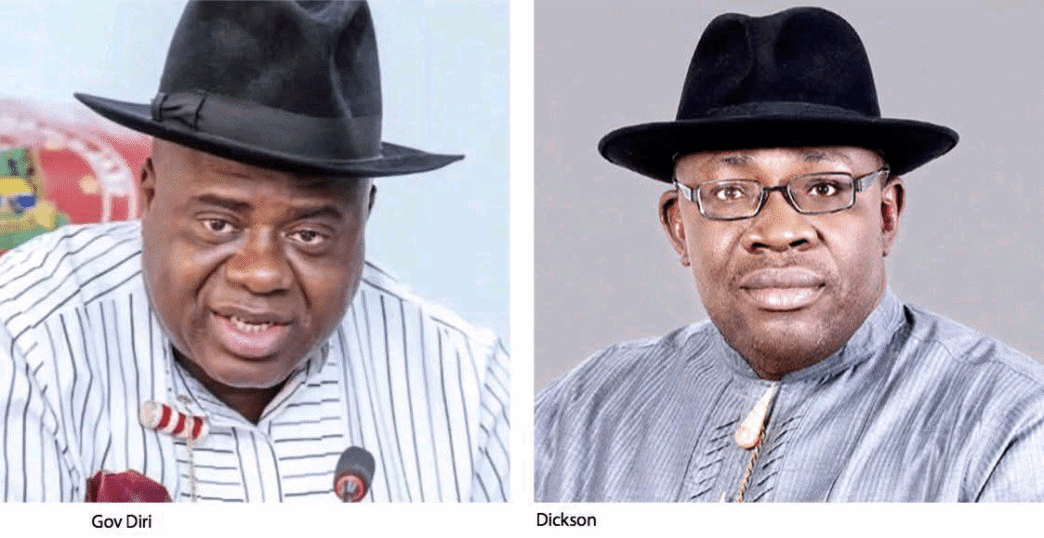
The defection of Henry Seriake Dickson to a party he founded has fundamentally altered Bayelsa’s political equation, signalling a deepening rift with Governor Douye Diri that could reshape the state ahead of 2027.
What began as quiet tensions between political allies has now evolved into an open contest for control, influence, and grassroots loyalty.
ATTENTION: Click “HERE” to join our WhatsApp group and receive News updates directly on your WhatsApp!
As defections mount and rhetoric sharpens, Bayelsa is fast emerging as a battleground between the Nigeria Democratic Congress (NDC) and the ruling All Progressives Congress (APC).
The political landscape in Bayelsa took a decisive turn when Dickson, a former two-term governor and current senator representing Bayelsa West, formally aligned himself with the NDC.
For observers, this move was more than symbolic—it was a strategic declaration of independence from the political structure that produced his successor.
For years, Dickson and Diri maintained a carefully managed relationship despite underlying tensions. Insiders suggest that cracks began to appear during Diri’s first term, but both men chose restraint, avoiding a public fallout.
READ ALSO: Bayelsa Rally: Pro-Tinubu Supporters Declare “Tinubu Till 2031” Amid Massive Turnout
However, Diri’s defection from the Peoples Democratic Party (PDP) to the APC in November 2025 appears to have triggered a decisive break.
Speaking at his country home in Toru-Orua, Dickson confirmed that Diri had consulted him before the defection but hinted at deeper grievances.
“Nothing is going on that I don’t know or monitor, but I keep quiet. Because I don’t want the people who wanted to be governors and I did not support and went for Diri, to laugh at me,” he said.
While he refrained from detailing specific disagreements, his remarks suggested a relationship strained by perceived political sidelining and betrayal.
Governor Diri, in what many interpret as a veiled response, defended his political decisions and dismissed the notion of loyalty to individuals over conviction.
“In politics, movement is allowed. Changing camps is allowed, but do it out of conviction. Do not be a slave to anyone. Your destiny and the next person’s destiny are not the same,” he stated.
With both leaders now firmly on opposing sides, the political temperature in Bayelsa has risen sharply. The emergence of the NDC as a competing force has introduced a new dynamic, challenging the APC’s dominance and energising grassroots political engagement.
Dickson’s reputation as a skilled grassroots mobiliser is already evident in the wave of defections trailing his movement. Key political figures, including Selekebina Saboh and Wilson Ayakpo Dauyegha, have joined the NDC alongside thousands of supporters. The party has also established structures across all eight local government areas, signalling serious organisational intent.
In one of the most symbolic shifts, Diri’s own brother, Doubara Kumokou, popularly known as “Youth Governor,” defected to the NDC in a rally described as carnival-like. The move underscores the deepening political divide, even within influential families.
Dickson has framed the NDC as an ideological alternative, positioning it against what he describes as “state capture.”
“No state in Nigeria should be allowed to perpetuate state-capture for the benefit of a few individuals… The NDC is determined to change this paradigm,” he declared.
However, the APC-led government is not yielding ground. Efforts are underway to consolidate support, particularly in Bayelsa West, where the party is countering NDC’s growing influence. Leaders from Ofoni community, including Christopher Ewhrudjakpo, have publicly reaffirmed loyalty to the Diri administration, insisting their alignment with the APC remains firm.
Beyond defections, concerns are mounting over allegations of political intimidation. Reports of salary stoppages for individuals associated with the NDC have added another layer of tension. Michael Magbisa, a former commissioner, claimed his salary was halted and cited safety concerns after resigning from the APC.
“I have also left the official commissioners’ quarters because my family and I are not safe,” he said.
While some political commentators defend such actions as consequences of divided loyalty, others warn they could deepen divisions and inflame tensions.
Criticism has also emerged from regional groups such as the South-South Reawakening Group (SSRG), whose convener Joseph Ambakederimo dismissed the NDC as lacking ideological grounding and warned it could politically isolate Bayelsans.
Despite such criticism, the unfolding contest suggests a broader struggle—not just for political control, but for narrative dominance and future direction.
Governor Diri himself has cautioned against complacency within the APC, acknowledging the growing opposition.
“We can’t pretend that we don’t have opposition. We must stand firm, not to be defeated… Political leaders should go back and hold their wards and local government tight,” he said.
As Bayelsa inches closer to the 2027 elections, the rivalry between Dickson and Diri is no longer a private disagreement—it is a defining political contest. The coming months will test not only the strength of their respective camps but also the resilience of the state’s political stability.