

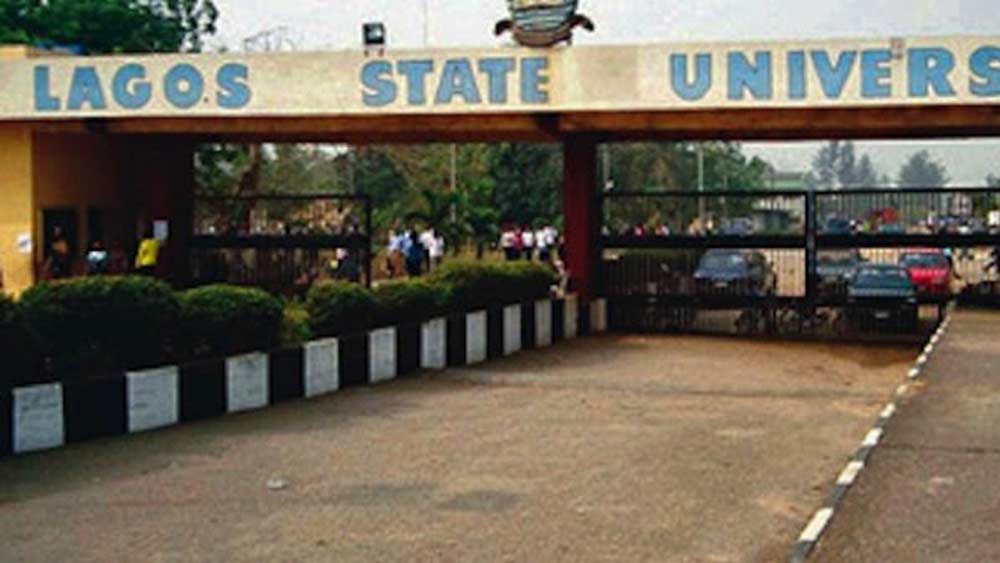
Mr Tolani Sule, Lagos Commissioner for Tertiary Education, says the Lagos State University (LASU) spends over N200 million monthly on electricity for staff and students.
He said the rising energy costs reflected broader challenges facing public universities, including unstable grid supply and heavy reliance on diesel-powered generators.
Sule disclosed this at the sod-turning ceremony for the TETFund/PPP Students’ Hostel Project at the university’s main campus in Ojo on Friday.
He said the cost covered network bills and diesel used to power generators across faculties, hostels, administrative buildings, and other essential services.
According to him, the development has placed significant financial pressure on the institution, affecting funds available for academic and infrastructural improvements.
He noted that managing such recurring expenses had become increasingly difficult amid competing priorities within the university system.
He expressed optimism that the Federal Government’s planned power plant would drastically reduce the cost burden and improve efficiency.
“With this power plant being planned for us, we believe a major challenge in electricity supply will be addressed,” he said.
He added that stable electricity would enhance teaching, research, and student welfare across the institution.
The commissioner described the hostel project as part of broader efforts to improve infrastructure and student welfare in tertiary institutions nationwide.
He said the initiative reflected a renewed focus on addressing long-standing deficits in accommodation and campus facilities.
He noted that the Minister of Education, Dr Tunji Alausa, had shown commitment to the university’s development through strategic interventions.
He added that the interventions reflected the government’s passion for advancing education and strengthening institutions across the country.
Sule commended the Lagos State Government and university management for reforms sustaining LASU’s status as a leading institution.
He said the projects would complement existing facilities and address critical needs, particularly in accommodation and power supply.
He appreciated the partnership between the federal and state governments, noting it had eased financial pressure on the state.
He appealed for similar interventions in other state-owned institutions, including LASUSTECH and LASUED.
He urged the Federal Government to expand support to ensure balanced development across Lagos State’s tertiary institutions.
Also speaking, Alausa said the project formed part of a wider strategy under President Bola Tinubu to enhance learning conditions nationwide.
The minister added that the strategy aimed to expand access to quality education and ensure stability in Nigeria’s tertiary education system.
He noted that infrastructure such as accommodation, power supply, and modern learning facilities were essential for achieving global education standards.
According to him, the Federal Government, through TETFund, will spend about N100 billion in 2026 on hostel construction across 50 institutions.
He said an additional N96 billion under similar interventions brought the total allocation to about N200 billion for student accommodation projects.
“This administration recognises that quality education goes beyond lectures. It includes welfare, infrastructure, and a stable academic calendar,” Alausa said.
Providing background, he said tertiary institutions had recorded uninterrupted academic calendars in the past three years due to deliberate policies.
He added that improved labour relations and sustained funding have contributed to the stability observed across universities.
He said N60 billion was earmarked in 2026 for rehabilitating medical schools and upgrading teaching facilities nationwide.
He added that N70 billion had also been allocated for upgrading engineering workshops and laboratories to meet modern standards.
On energy, Alausa disclosed plans for independent power plants in selected institutions, including an 11-megawatt facility at LASU.
He said an additional four-megawatt plant was planned for the Epe campus to ensure stable electricity for academic activities.
He explained that these projects aimed to reduce dependence on unreliable public power supply and expensive diesel generation.
Speaking on the LASU project, he said the 1,500-bed hostel will be funded through a PPP involving TETFund and private investors.
According to him, the facility will include a gym, library, canteen, and recreational spaces in line with international standards.
He added that modern hostel designs would enhance student comfort, safety, and overall campus experience.
The minister said the project addressed the significant accommodation deficit in Nigerian universities.
He noted LASU, with about 84,000 students, currently had only around 7,000 bed spaces.
“This clearly shows the gap we are working to bridge. Students’ welfare remains a top priority for this government,” he said.
Alausa urged Nigerian youths to adopt a positive outlook, warning that persistent negative narratives could discourage investment.
He said such perceptions could also limit opportunities for growth, innovation, and international collaboration.
He emphasised that government policies increasingly focused on equipping young people with entrepreneurial and technical skills.
He cited ongoing training programmes and a proposed Entrepreneurship, Innovation and Business Incubation Certification scheme for universities.
He added that the initiative would help students become job creators and contribute meaningfully to national development.