

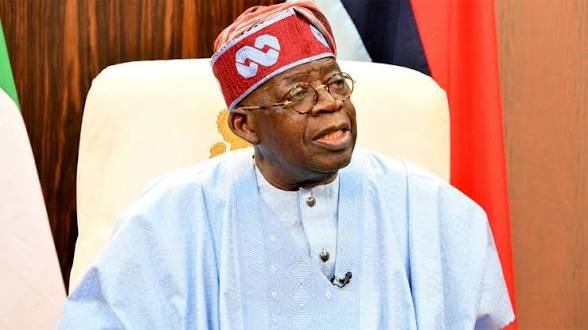
President Bola Tinubu has declared insecurity and poverty as national emergencies, citing their serious impact on jobs, productivity, and Nigeria’s overall stability.
The declaration was made during the 2026 Workers’ Day celebration at Eagle Square, Abuja, where Tinubu addressed thousands of workers and labor leaders.
Represented by the Secretary to the Government of the Federation, Senator George Akume, the President emphasized that without addressing these challenges, Nigeria cannot achieve meaningful employment or economic growth. “There cannot be decent work where workers fear for their lives, where wages cannot feed a family, or where insecurity disrupts farms, factories, markets, and other economic activities,” Tinubu said in his statement.
He acknowledged that insecurity and poverty remain major obstacles to the country’s development but reassured Nigerians that his administration is tackling both issues with urgency. “These hydra-headed challenges, the government notes, have been treated as a national emergency due to their impact on productivity, livelihoods, and the confidence of both workers and employers,” he added.
Tinubu highlighted the Community Protection Guards Initiative, which has recruited 45,000 young Nigerians to strengthen community security while also creating jobs. Under his Renewed Hope Agenda, Tinubu also referenced significant economic interventions, including expanded cash transfer programs reaching 15 million vulnerable households, lifting approximately 7.5 million Nigerians out of poverty.
The President also pointed to major infrastructure projects, such as the Lagos-Calabar Coastal Highway and the Ajaokuta-Kaduna-Kano Gas Pipeline, which have collectively created over 600,000 jobs nationwide.
On workers’ welfare, Tinubu announced the implementation of a new national minimum wage, the clearing of pension arrears, and the reintroduction of gratuity payments from January 2026. He also mentioned that over 800,000 informal sector workers have been enrolled in the micro-pension scheme, while small businesses continue to benefit from a ₦200 billion MSME support fund.
In his speech, the President stressed the importance of the Decent Work Agenda, calling it both a global commitment and a national necessity. “The agenda is not merely an international framework but a national imperative, aligned with its vision of a country where hard work is rewarded, opportunities are accessible without discrimination, and every citizen can reach their full potential,” he said.
Tinubu also outlined key initiatives aimed at improving agriculture, including the National Agricultural Growth Scheme-Agro-pocket, dry season farming initiatives, mechanisation programmes, and financial inclusion efforts through the Bank of Agriculture. Additionally, he noted the deployment of 10,000 Agro-Rangers by the Nigeria Security and Civil Defence Corps across 19 states to protect farmers and agricultural investments.
In addressing organized labor, including the Nigeria Labour Congress (NLC) and Trade Union Congress of Nigeria (TUC), the President called for sustained dialogue and restraint in resolving industrial disputes. “Strike should be the last resort, not the first,” he remarked.
Tinubu concluded by commending the sacrifices of security personnel and reaffirming his administration’s commitment to restoring peace and economic stability. “We are committed to improving working conditions, promoting fair wages and ensuring that every Nigerian worker enjoys dignity, safety, and equal opportunity in the workplace,” he added.