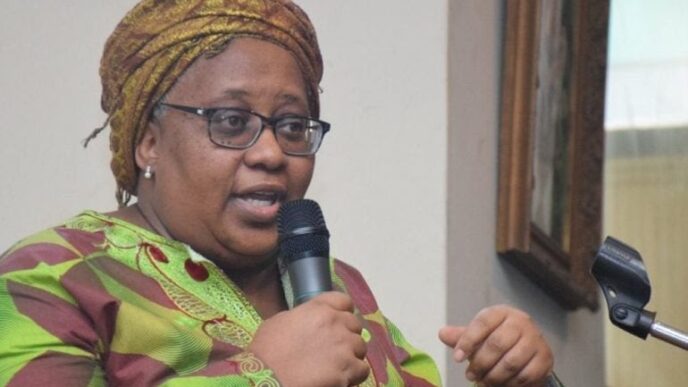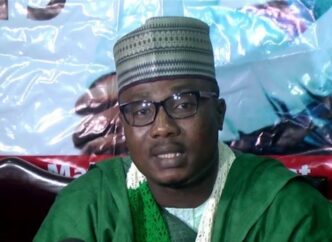



Veterinary doctors under the aegis of the Nigerian Veterinary Medical Association have expressed concern over the poor sanitary condition of the Lafia Modern Abattoir, calling for urgent intervention by the Nasarawa State Government.
The President of the association, Dr Moses Arokoyo, raised the concern on Tuesday in Lafia shortly after an inspection of the facility as part of activities marking the 2026 World Veterinary Day.
He described the abattoir as a sensitive facility where animals are slaughtered daily, warning that its unhygienic state poses a serious risk to public health.
Arokoyo urged the state government to intensify monitoring of abattoir operations to ensure compliance with sanitation laws.
He also recommended the reconstruction of the facility, including the provision of water and proper sanitation infrastructure.
The NVMA president warned that failure to act could expose residents to infectious diseases.
He said, “You cannot have an abattoir without water. It is a risk, not just to all of us. This is not a place where animals should be slaughtered. This is a public health risk.
“If we have an outbreak of anthrax here, people would die in their thousands. If you have a single case of anthrax in this kind of place, it won’t be for one year, with the kind of floor I have seen here, with a shortage of water supply, if mistakenly there is an outbreak of anthrax here, it will not go in three years.
“The spores of this anthrax will be buried inside the ground I have seen here, because the flooring is not there, and blood has stayed here over the years.
“Therefore, to the government, if I am permitted to say, I would say declare a state of emergency concerning this abattoir. It is not something to postpone; hundreds of cattle have been slaughtered here, and I mean for public consumption. So, a state of emergency should be declared concerning the abattoir.”
He added that consumption of meat processed under such conditions could expose residents, particularly women, to health complications, including miscarriages.
Arokoyo further decried the shortage of veterinary personnel, noting that Nasarawa State has only six veterinarians covering 13 local government areas.
“How does the Veterinary Doctor measure up to that? So, beginning from Nasarawa State and nationally, this is a national emergency situation, something needs to be done,” he said.
Also speaking, the Chairman of the association in the state, Dr Mukhtar Sabuwa, said the abattoir was built about 14 years ago without essential infrastructure such as a proper slaughter slab, flooring, and drainage system.
“And again, over time, 14 years down the line, there has not been maintenance or adequate renovation of the abattoir. It has been over 14 years since the primary construction; there is a need for proper readjustment and of course, if possible, to demolish the abattoir.
“But if it cannot be demolished, something should be done to put it into good usage for public safety,” he said.
The Secretary of the abattoir, Mohammed Gambela, attributed the situation partly to inadequate water supply.
“We need more water. We need more boreholes here. Because we are using much water here, even the reservoir itself, we are in need of a reservoir,” he said.
He appealed to the state government to visit the facility and address the challenges.
Meanwhile, at a lecture held at the Federal University of Lafia to mark the event, the Chief Veterinary Officer of Nigeria, Dr Samuel Akawu Anzaku, emphasised the role of veterinary professionals in safeguarding animal, human, and environmental health.
Also, the Dean of the Faculty of Veterinary Medicine, Prof Muhammed Danlamin Salihu, called for stronger collaboration among medical, veterinary, and environmental experts.
“If the environment is stable, that means the humans would be stable, so it is inter connected; the public health is interconnected,” he said.