
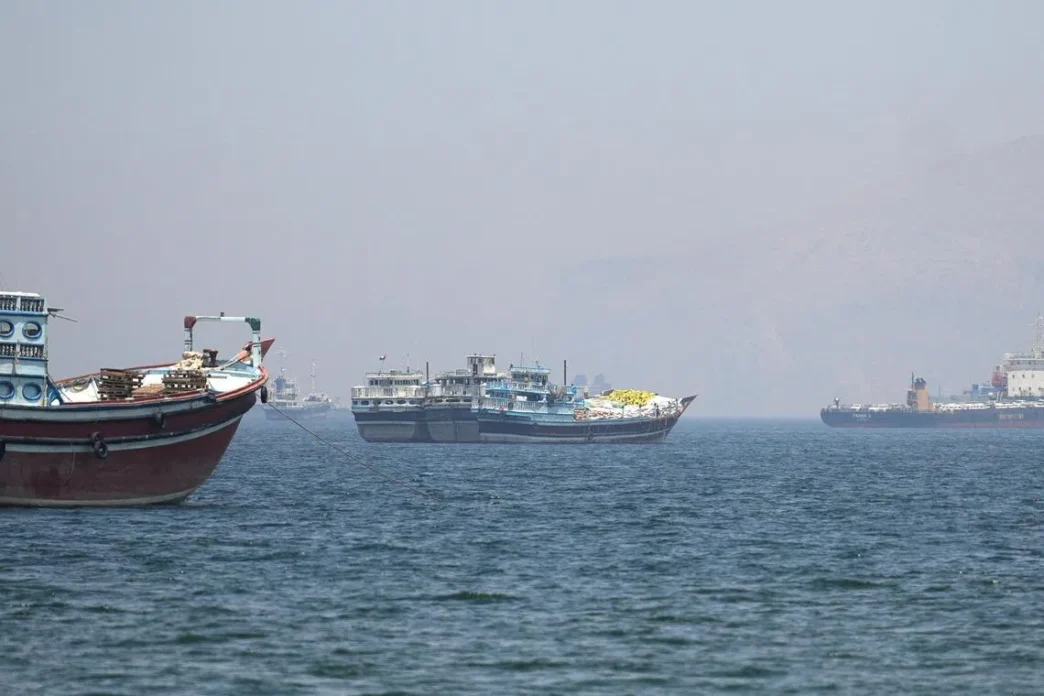
PARIS – The closure of the Strait of Hormuz as well as tensions in the Red Sea are reshaping trade routes, with Africa becoming a hub of global container ship traffic, according to logistics and maritime sources.
Over the past two months, the blockade has also pushed shipowners to find alternative land corridors to deliver foodstuffs and manufactured goods by truck, as they can no longer reach the Gulf’s coastal countries by sea.
The Saudi port of Jeddah on the Red Sea is becoming a new regional “hub”, where ships from maritime giants MSC, CMA CGM, Maersk and Cosco arrive via the Suez Canal.
Cargo then leaves by truck along a desert highway to deliver to places such as Sharjah, Bahrain and Kuwait, which have not been served by sea for the past two months.
“The port of Jeddah is not at all sized to handle such import volumes and a port congestion situation is emerging,” Mr Arthur Barillas de The, cofounder of freight forwarder Ovrsea, told AFP.
According to data from Kpler Marine Traffic, 11 container ships were docked in Jeddah on April 30, with nine waiting, and an average wait of 36 hours before unloading compared to 17 hours the previous week.
Shipowners have said they will use three ports outside the Strait of Hormuz – Oman’s Sohar, and the UAE ports of Khorfakkan and Fujairah, which are connected by land from the United Arab Emirates.
The port of Aqaba in Jordan serves as a base for sending goods to Baghdad and Basra in Iraq, while a Turkish corridor is also allowing goods into northern Iraq.
The situation started well before the war in Iran but is very much connected to the conflict.
Avoiding the Red Sea from the Bab al-Mandeb Strait to the Suez Canal dates back to Nov 19, 2023 and the first attack on a container ship by Iran-backed Houthi militias from the coast of Yemen, said CyclOpe, a specialist commodities publication.
The rerouting of ships has now become systematic, said Mr Ronan Boudet, head of container intelligence at Kpler.
They skirt around Africa by following its eastern coast as far as the Cape of Good Hope in southern South Africa before heading back north towards Europe and the Mediterranean.
“With the current situation in the Gulf, we have put several more coins in the machine, it’s not going to get better anytime soon,” Mr Edouard Louis-Dreyfus, chairman of French shipping giant Louis Dreyfus Armateurs, told AFP.
“Today, 70 per cent of the freight traffic that went through the Red Sea in 2023 is being rerouted via the Cape of Good Hope,” added Mr Yves Guillo, a supply chain expert at Efeso, a management consultancy in Paris.
According to data from the International Monetary Fund’s PortWatch platform based on ships’ GPS signals, commercial vessel traffic via the Cape of Good Hope has more than tripled in three years, while traffic through the Bab al-Mandeb Strait has fallen by more than half.
Between March 1 and April 24, 2026, an average of 20 commercial vessels went round the Cape of Good Hope every day compared with six in the same period in 2023.
By comparison, traffic in the Red Sea has plummeted: from 18 transits per day through Bab al-Mandeb between March and April 2023, the average fell to five three years later.
Transport times have lengthened between Asia and Europe by an average of two weeks and costs have risen because 30 to 50 per cent more fuel is needed and 10 to 20 per cent more ships to ensure the same frequency of service, said Mr Guillo.
The average price to transport a standard 40-foot container on the main shipping routes increased by 14 per cent in April compared to the same period in 2025, he added, citing changes in the Drewry freight index.
Large differences exist between routes: some African ports are seeing their activity increase. The Tanger Med Port Authority said it handled 11 million standard containers in 2025 – up 8.4 per cent.
But Egypt lost toll revenues from the Suez Canal, which make up a large part of its income. According to CyclOpe, in 2024 it lost US$7 billion (S$8.9 billion) – a drop of more than 60 per cent compared with 2023. AFP