
The US Treasury Department imposed sweeping sanctions Friday on three major Iranian currency exchange houses and more than a dozen front companies, The Post has learned, accusing them of laundering billions of dollars in foreign currency to bankroll Tehran’s military and proxy network.
This crackdown, a cornerstone of the Trump administration’s “Economic Fury” maximum-pressure campaign, targets the shadow banking systems that help Iran convert illicit oil revenue.
Because these revenues are largely paid in Chinese yuan, these networks are vital for converting funds into US dollars, euros, and other usable currencies for the regime.
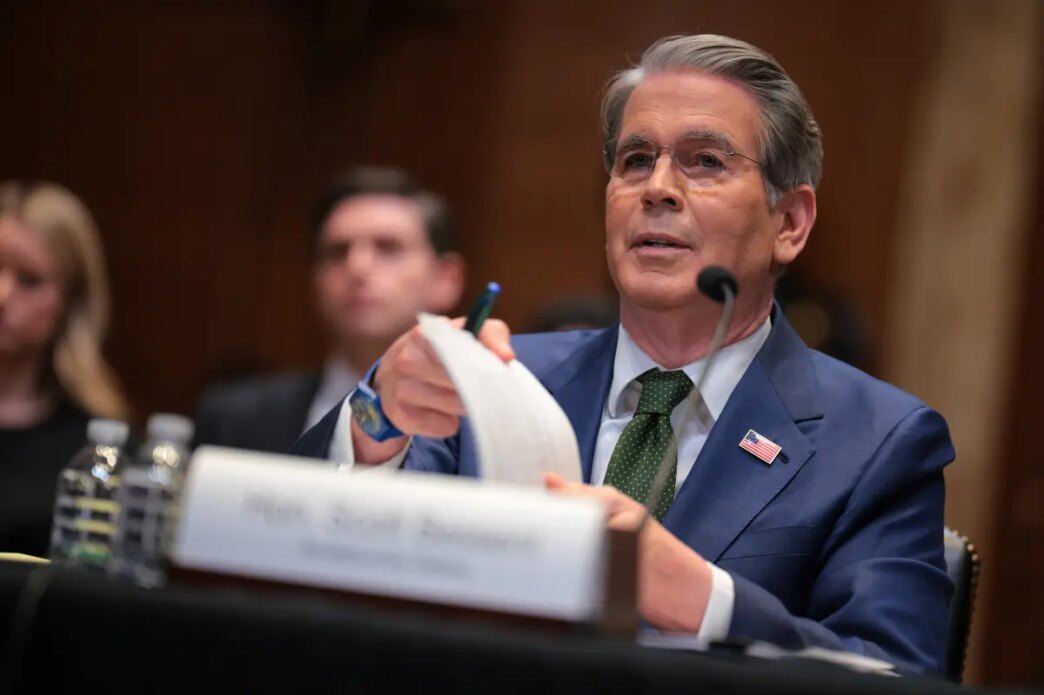
Treasury Secretary Scott Bessent stated the designations strike directly at the financial arteries keeping Iran’s war machine alive.
“Iran is the head of the snake for global terrorism, and under President Trump’s leadership, Treasury is moving aggressively, through Economic Fury, to sever the Iranian military’s financial lifelines,” Bessent said in a statement. “We will relentlessly target the regime’s ability to generate, move, and repatriate funds.”
The targeted exchange houses—Opal Exchange, Radin Exchange, and Arz Iran Exchange (also known as Tahayyori Guarantee Society)—along with their owners, allegedly orchestrate sophisticated networks of front companies.
These networks handle tens of billions of dollars in annual trade for Iran’s sanctioned entities, including its central bank and the National Iranian Oil Co.
Treasury issued the designations under an executive order aimed at Iran’s financial sector.
Key operators and owners—Iranian nationals Pedram Pirouzan, Hossein Mohammad Rezaei, Masoud Mohammad Rezaei, Nasser Ghasemi Rad, and Ehsan Tahayyori—were also personally hit with Friday’s blocking sanctions.
To operate seamlessly, these exchanges rely on shell companies registered to their owners, who frequently list citizenship from Dominica or St. Kitts and Nevis.

This tactic successfully masks their Iranian ties, allowing them to open foreign bank accounts and move money for Iranian importers, exporters, and military-linked entities, Treasury officials noted.
Friday’s actions sweep up 15 specific front companies scattered across multiple jurisdictions.
Collectively, these illicit networks have processed hundreds of millions of dollars in cross-border transactions, the department said.
Friday’s move compounds more than 1,000 Iran-related designations issued since February 2025 national security diktat signed by President Trump.
It directly follows earlier actions targeting Iranian “rahbar” companies tied to specific banks and digital asset platforms used to dodge sanctions.
Under these penalties, any assets the designated individuals or companies hold within the United States or under US jurisdiction are immediately frozen, and Americans are barred from doing business with them.
Furthermore, foreign parties risk secondary sanctions for knowingly facilitating the blocked entities’ activities.
Treasury officials emphasized that the ultimate goal is not mere punishment but behavioral change—forcing Tehran to pay a significantly higher price for its destabilizing regional actions. Violations can trigger severe civil or criminal penalties.
Officials said whistleblowers providing actionable intelligence may qualify for lucrative awards through FinCEN’s program.
These new designations arrive as Iran continues selling oil on the global market despite years of stringent U.S. sanctions. Tehran utilizes an elaborate web of intermediaries to keep cash flowing to its military, the Islamic Revolutionary Guard Corps, and proxy militias across the Middle East.
By striking the currency exchanges acting as the regime’s crucial financial middlemen, Treasury aims to make it exponentially harder and more expensive for Tehran to fund its ambitions.